
Designing Homes That Work Better in Warm Weather

Contemporary residential design increasingly embraces openness, natural light and strong connections between indoor and outdoor spaces. Expansive glazing, open-plan layouts and large sliding or bi-fold doors have become defining features of modern homes, creating visually impressive environments that feel bright, spacious and connected to the landscape.
Yet as warmer weather becomes a more significant consideration across the UK, these same design features can introduce practical challenges that affect how comfortable and enjoyable a home feels throughout the summer months.
Designing homes for warmer weather is no longer simply about aesthetics. It requires a thoughtful approach to ventilation, solar gain, privacy, insect control and day-to-day usability. The most successful homes are those that balance architectural ambition with practical comfort, ensuring spaces remain pleasant and functional when temperatures rise.
The growing importance of warm weather design
The way people use their homes continues to evolve. Open-plan living, flexible working patterns and greater emphasis on outdoor entertaining mean that residential spaces are occupied differently than they were a decade ago.
At the same time, warmer summers and more frequent periods of elevated temperatures are influencing expectations around comfort. Homeowners increasingly want spaces that remain usable throughout the day without excessive reliance on mechanical cooling systems.
This shift is encouraging architects, designers and homeowners to think more carefully about how buildings respond to seasonal conditions. Rather than treating comfort measures as an afterthought, they are becoming an integral part of the design process from the earliest stages.
When spaces become difficult to use
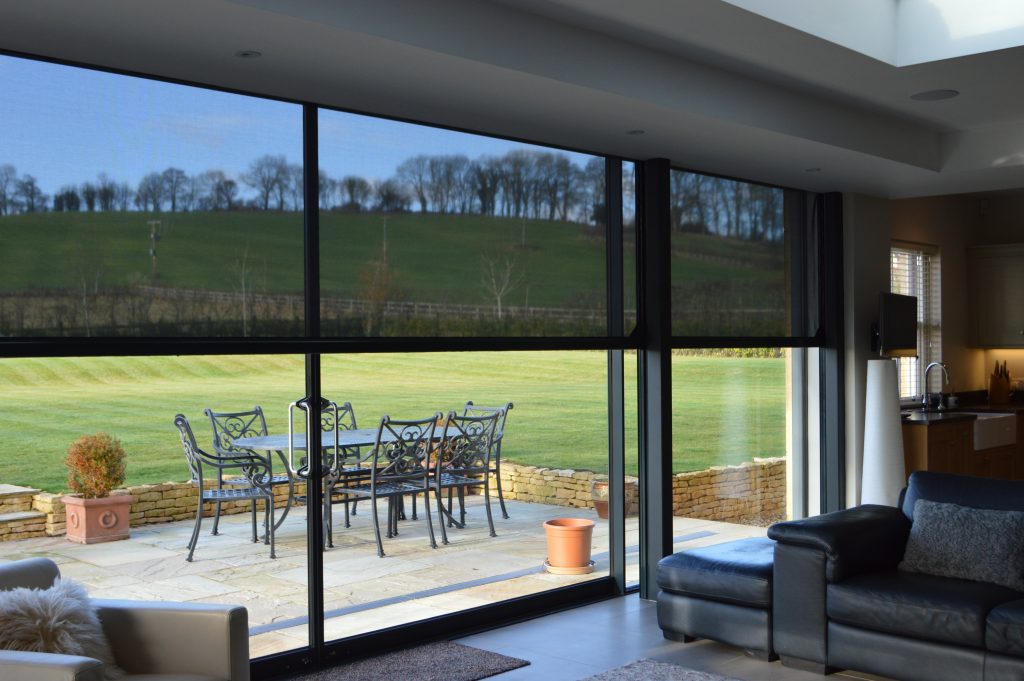
Large glazed openings create striking architecture. They maximise daylight, frame views and help blur the boundary between inside and outside.
However, visual appeal alone does not guarantee everyday comfort. Without appropriate consideration, extensive glazing can contribute to a range of warm weather challenges, including:
Excessive solar gain
Direct sunlight entering through large glazed areas can significantly increase internal temperatures. South and west-facing elevations are particularly susceptible during warmer months, making certain rooms uncomfortable during parts of the day.
Glare and visual discomfort
Abundant daylight is desirable, but uncontrolled sunlight can create glare on screens, televisions and workspaces. This can reduce the usability of otherwise attractive living areas.
Restricted natural ventilation
Many homeowners wish to take advantage of cooler outdoor air by opening doors and windows. Yet concerns about insects, security or privacy often discourage occupants from leaving openings uncovered.
Reduced indoor–outdoor enjoyment
Large sliding doors are often specified to encourage movement between home and garden. However, if insects quickly enter the property whenever doors are opened, occupants may limit how frequently these openings are used.
The result is a disconnect between architectural intention and everyday living experience.
Why ventilation matters more than ever
Natural ventilation remains one of the most effective strategies for maintaining comfort during warmer weather.
By encouraging airflow through a property, architects can help reduce heat build-up, improve indoor air quality and create a more pleasant internal environment. Cross-ventilation strategies are particularly effective, allowing cooler air to enter from one side of the building while warmer air exits through another.
However, successful ventilation relies on occupants feeling comfortable leaving openings exposed.
When homeowners are concerned about insects entering living spaces, windows and doors are often kept closed, reducing the effectiveness of natural cooling strategies.
This highlights an important principle within residential ventilation design: a ventilation strategy is only successful if people are willing to use it.

Supporting everyday comfort without compromising design
One of the challenges facing architects and designers is how to introduce practical comfort measures without disrupting carefully considered architectural aesthetics.
Homeowners invest heavily in clean sightlines, minimalist detailing and uninterrupted views. Visible additions that detract from these qualities can undermine the overall design intent.
This is why discreet screening systems are becoming increasingly relevant within modern residential projects.
Rather than introducing permanent visual barriers, retractable screen solutions can remain hidden when not required and deployed only when conditions demand them.
The result is a more adaptable living environment that responds to changing weather conditions while preserving architectural character.
How retractable screens support warm weather living
Retractable insect screens offer a practical way to enhance the usability of windows and doors throughout warmer months.
By creating a protective barrier against insects, they allow occupants to open up their homes more confidently and enjoy the benefits of natural airflow.
For homeowners, this can support:
- Improved natural ventilation
- Enhanced indoor comfort
- Greater enjoyment of outdoor connections
- Reduced dependence on mechanical cooling
- More flexible use of doors and windows
Importantly, modern retractable screens can be integrated discreetly into the architecture, remaining virtually unnoticed when not in use.
This allows designers to maintain the visual simplicity that defines many contemporary homes.
The role of motorised screens in contemporary homes
As residential projects become increasingly sophisticated, homeowners are seeking solutions that combine convenience with performance.
Motorised screens can provide additional flexibility for larger glazed openings, outdoor living spaces and covered entertaining areas.
Integrated seamlessly into the building fabric, they can help manage comfort while preserving views and architectural clarity.
For projects where large openings are central to the design concept, motorised screening solutions can support usability without introducing permanent visual obstructions.
This balance between functionality and aesthetics is often what distinguishes a home that photographs beautifully from one that genuinely performs well throughout the year.
Designing for lifestyle rather than seasons
Perhaps the most important consideration is recognising that residential comfort is not seasonal – it is experiential.
Homeowners do not think in terms of building performance metrics. They think about whether a room feels comfortable to sit in, whether they can leave doors open while entertaining, or whether they can enjoy an evening breeze without attracting unwanted insects.
The most successful residential designs anticipate these everyday experiences. By considering ventilation, solar gain solutions, privacy and screening strategies from the outset, architects can create homes that remain comfortable, adaptable and enjoyable throughout changing weather conditions.
A more integrated approach to warm weather design
As expectations around comfort continue to evolve, designing homes for warmer weather requires more than simply creating visually impressive spaces. It involves understanding how people interact with their homes day after day and ensuring those spaces support real-world living.
Discreet screening systems, retractable insect screens and carefully considered ventilation strategies can all play a valuable role in achieving this balance. When integrated early within the design process, these solutions help preserve architectural intent while enhancing comfort, usability and enjoyment.
Ultimately, the best homes are not only beautiful to look at. They are designed to work effortlessly for the people who live in them, even during the warmest days of the year.
Other Posts
Industry News

Insect News

Insect News
Our solutions
Explore more products in our range


