
Rethinking Glazed Extensions: How to Make Light-Filled Spaces Work Year-Round

Few architectural features transform a home as dramatically as a glazed extension. Natural light floods the interior, garden views become part of everyday living, and open-plan spaces feel larger, calmer, and more connected to the outdoors. Whether used as kitchen extensions, dining areas, garden rooms, or contemporary living spaces, glazed extensions have become one of the most desirable additions in modern home design.
Yet despite their visual appeal, many homeowners discover that these spaces are not always as comfortable to live in as expected. What appears bright and inviting in architectural photography can become difficult to regulate throughout changing seasons. Summer overheating, harsh glare, fluctuating temperatures, and limited airflow can all affect how consistently these spaces are used.
The challenge is rarely the concept of the extension itself. More often, it is the absence of a thoughtful comfort strategy that supports year-round usability.
Why glazed extensions often feel seasonal
Large expanses of glazing naturally respond more dramatically to external conditions than traditional rooms.
In summer, direct sunlight can intensify heat build-up and glare. During colder months, temperature fluctuations may make the space feel less balanced compared with the rest of the home. Even during mild weather, strong afternoon sun or poor airflow can quickly affect comfort levels.
Common frustrations include:
- Overheating during warmer months
- Excessive glare on bright afternoons
- Uneven temperatures throughout the day
- Limited airflow when doors remain closed
- Difficulty using the space comfortably year-round
- Furniture and flooring exposed to prolonged UV light
As a result, many glazed extensions become spaces homeowners use selectively rather than naturally incorporating into daily life.
A room intended for all-day living may gradually become avoided during peak summer heat or used only at certain times of year.
The problem with reactive solutions
When comfort issues emerge, homeowners often respond with temporary or seasonal adjustments.
This may include:
- Closing blinds during the hottest parts of the day
- Using portable fans or cooling systems
- Avoiding the room during peak sunlight hours
- Keeping doors shut to manage temperature or insects
- Adding heavy curtains or temporary shading
While these solutions may provide short-term relief, they often create new compromises. Darkened blinds reduce natural light. Closed doors limit airflow. Temporary shading can interrupt views and make the extension feel enclosed rather than open.
In many cases, the architectural qualities that made the extension appealing in the first place begin to feel diminished.
Why comfort should be designed into the space
The most successful glazed extensions are not simply visually impressive. They are adaptable, comfortable, and usable across changing conditions.
Rather than relying on reactive fixes, many homeowners are now adopting a more layered approach to environmental comfort. This means considering how sunlight, airflow, shading, and ventilation work together to create a more balanced space throughout the year.
A layered comfort approach can help support:
- Softer, filtered natural light
- Reduced glare during peak sun exposure
- Improved airflow through open doors and windows
- Better management of solar heat gain
- More consistent everyday usability
- Greater comfort without sacrificing openness
Importantly, this approach allows homeowners to preserve the defining qualities of glazed architecture while improving how the space functions in real life.

The role of discreet screening solutions
One of the challenges with many comfort interventions is that they can feel visually heavy or disconnected from the design of the extension itself. Bulky blinds, permanent shading structures, or temporary mesh systems may solve one problem while creating another aesthetically.
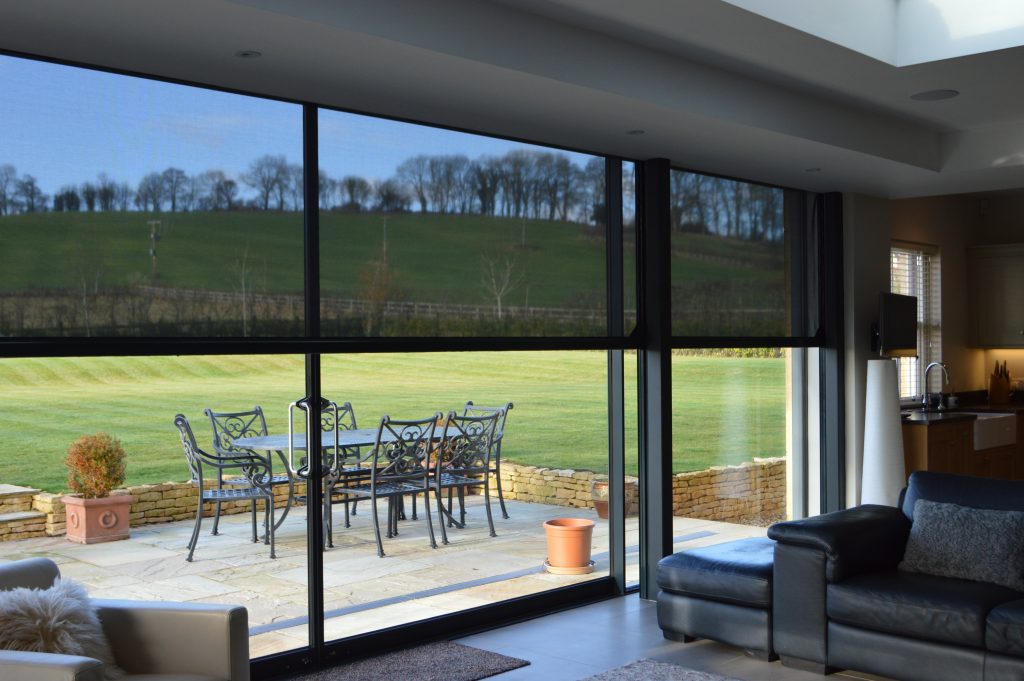
Discreet retractable screening systems offer a more integrated alternative. Designed to sit quietly within the architecture, these systems can help regulate light, glare, airflow, and insect control without overwhelming the visual simplicity of the space.
When not in use, retractable screens remain concealed, preserving uninterrupted glazing lines and maintaining the openness homeowners value. This allows the extension to retain its architectural clarity while becoming more comfortable to use throughout the year.
Managing summer overheating without losing light
One of the most common frustrations in glazed extensions is excessive summer heat. Large glazed elevations can amplify solar gain quickly, particularly in south-facing spaces or rooms with roof glazing. Homeowners often respond by darkening the room entirely, which removes the brightness and connection to the garden that made the space desirable.
Solar mesh screening offers a more balanced solution. Rather than blocking daylight completely, filtered solar shading softens direct sunlight while maintaining natural brightness and outward visibility. This helps create a calmer, more comfortable environment without making the room feel closed off.
The result is a space that remains visually light while becoming more usable during warmer months.
Supporting airflow and indoor-outdoor living
Many glazed extensions are designed to open directly onto gardens or terraces through bifold or sliding doors. However, maintaining comfortable airflow often becomes difficult when doors cannot remain open freely.
Insects, glare, or strong direct sunlight may lead homeowners to close openings more frequently than intended.
Integrated retractable screens help support natural ventilation while preserving comfort and usability. Doors can remain open for longer periods, helping the extension feel more connected to outdoor living throughout changing seasons. This flexibility is particularly valuable in open-plan homes where airflow contributes significantly to overall comfort.
Preserving architectural intent
For homeowners undertaking high-quality renovations or extensions, aesthetics matter as much as practicality.
Added systems should complement the architecture rather than compete with it.
Thoughtfully integrated retractable screens can often be recessed or colour-matched to surrounding frames, helping them blend naturally into the structure of the extension. When concealed, they remain almost invisible.
This subtle integration allows homeowners to improve comfort without compromising the clean lines, glazing proportions, or minimal detailing that define contemporary extension design.
Making extensions more liveable every day
The value of a glazed extension is not simply measured by appearance. It is measured by how comfortably and consistently the space can be enjoyed throughout the year.
Small comfort frustrations often have a significant impact on behaviour. If a room regularly feels too hot, too bright, or difficult to ventilate, homeowners naturally begin to avoid it during certain conditions. By contrast, spaces that feel adaptable and comfortable become part of everyday routines. They are used more naturally for relaxing, dining, entertaining, and spending time with family.
Thoughtful comfort design helps ensure glazed extensions fulfil their intended purpose – not just as visually striking additions, but as practical living spaces that work beautifully across every season.
Creating better balance in modern living spaces
As contemporary homes continue to prioritise natural light and indoor-outdoor living, managing environmental comfort becomes increasingly important. The goal is no longer simply to create bright spaces. It is to create spaces that remain enjoyable to use throughout changing weather, seasons, and times of day.
Discreet screening solutions offer homeowners a way to improve comfort while preserving the openness and architectural integrity of glazed extensions. With the right balance of light control, airflow, and usability, these spaces can move beyond seasonal enjoyment and become some of the most comfortable and valuable areas of the home all year round.
Other Posts
Industry News

Insect News

Insect News
Our solutions
Explore more products in our range


