
Passive Cooling Explained: A Smarter Way to Keep Your Home Comfortable

As UK summers become warmer and heatwaves more common, keeping homes comfortable is becoming a bigger challenge. Many modern homes are built to keep heat in during winter, but that can also make them feel uncomfortably warm during the summer.
While air conditioning is common in hotter countries, it’s still relatively unusual in the UK. Instead, many homeowners are looking for simple, energy-efficient ways to keep their homes cooler. One of the most effective approaches is passive cooling.
What is passive cooling?
Passive cooling is a way of keeping your home cool without relying on air conditioning or other mechanical cooling systems.
Rather than removing heat after your home has become too warm, passive cooling helps stop heat from building up in the first place. It combines simple design features and everyday habits to create a more comfortable indoor environment while using little or no extra energy.
Why is passive cooling becoming more important?
Homes in the UK have become much more energy efficient over the years. Better insulation, improved glazing and airtight construction help reduce heating bills during winter, but they can also make it harder for heat to escape during summer.
At the same time, hotter summers and more frequent heatwaves mean overheating is becoming a growing concern for many homeowners. Passive cooling helps tackle this by reducing heat entering your home and making better use of natural ventilation, helping you stay comfortable without relying on air conditioning.
Simple ways to use passive cooling at home
The good news is that passive cooling doesn’t require major changes to your home. A few simple steps can make a noticeable difference.
Keep direct sunlight out
Sunlight shining through windows can quickly warm up a room. Using external shading, blinds or curtains during the hottest part of the day can help reduce heat build-up before it becomes uncomfortable.
Make the most of natural ventilation
Fresh air is one of the easiest ways to cool your home naturally. Opening windows or doors on opposite sides of your home encourages air to flow through, carrying warm air out and bringing cooler air in. This is known as cross ventilation and is one of the simplest passive cooling techniques.

Open windows at the right time
During a heatwave, opening windows all day isn’t always the best option. If the air outside is hotter than inside, you’re simply letting more heat into your home. Instead, keep windows and curtains closed during the hottest part of the afternoon and open them in the evening or early morning when temperatures have dropped.
Don’t forget about insulation
Many people think insulation only helps during winter, but it also works during summer. Good insulation slows down the movement of heat, helping your home stay at a more stable temperature throughout the year.
Reduce heat from inside the home
Cooking, electrical appliances and lighting all generate heat. On particularly warm days, small changes such as using outdoor cooking where possible, switching off appliances you’re not using and replacing older bulbs with LEDs can all help reduce indoor temperatures.
How do retractable screens support passive cooling?
Natural ventilation only works if you’re happy to leave your doors and windows open. Unfortunately, many homeowners close them earlier than they’d like because of flies, mosquitoes and other insects, especially during warm summer evenings.
Retractable screens remove that barrier by allowing fresh air to flow through your home while helping to keep insects outside. That means you can enjoy natural ventilation for longer and make better use of cooler evening air.
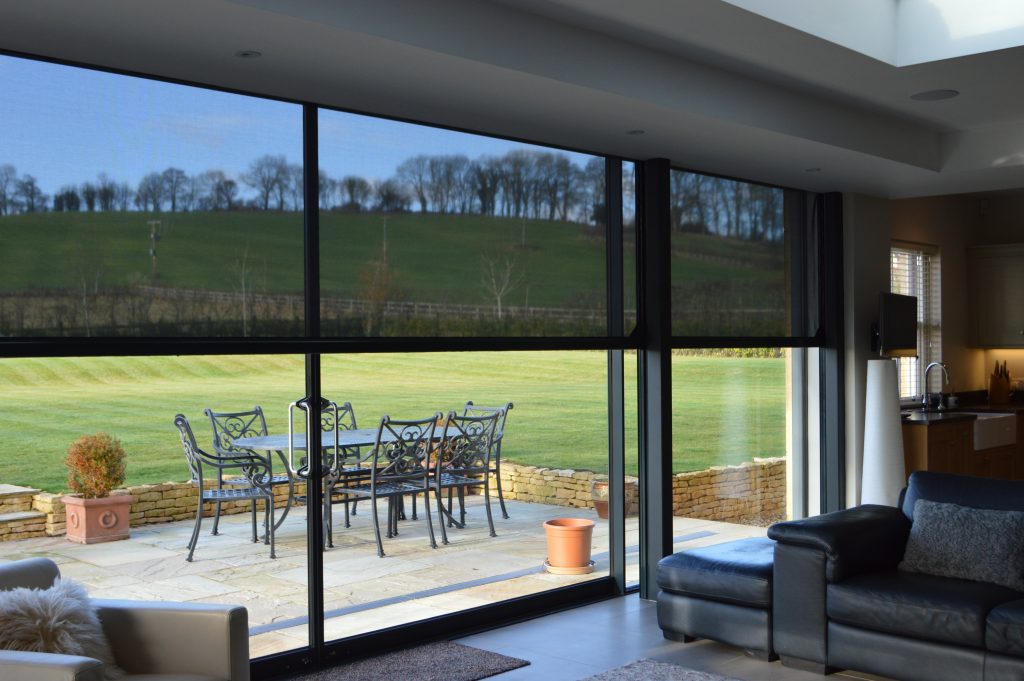
For homes with large areas of glazing, external solar screens can also help reduce the amount of heat entering through windows. Because they stop sunlight before it reaches the glass, they can help keep rooms cooler while still allowing natural light into your home.
A smarter way to stay comfortable
Passive cooling isn’t about one product or one solution. It’s about combining simple measures that work together to reduce overheating and make your home more comfortable.
Whether it’s using shade more effectively, improving natural ventilation or opening your windows at the right time, small changes can have a noticeable impact.
As UK summers continue to get warmer, passive cooling offers a practical and energy-efficient way to stay comfortable. By making the most of natural airflow and thoughtful design, you can enjoy a cooler, healthier home with less reliance on mechanical cooling.
Other Posts
Industry News

Insect News

Insect News
Our solutions
Explore more products in our range


