
Inside-Outside Living: How Retractable Screens Support Modern Open-Plan Design

Open-plan living has become a defining feature of modern residential design. Large glazed openings, fluid layouts, and strong visual connections to outdoor spaces are now central to how contemporary homes are planned and experienced.
The purpose of open-plan homes is to create a sense of space, light, and connection. By removing walls between living areas, layouts feel more sociable and flexible, encouraging family interaction and easier entertaining. Natural light can travel further through the home, while spaces can adapt to different daily needs – from quiet living to social gatherings – making open-plan design particularly valuable for modern lifestyles, even within smaller properties.
However, with this openness comes practical challenges: managing airflow, controlling insects, maintaining comfort, and preserving uninterrupted views – all without disrupting the architectural intent.
This is where Phantom Screens play a quiet but essential role. Thoughtfully integrated, they support open-plan living without compromising design, flexibility, or visual clarity.
Open-plan design and the desire for connection
Modern open-plan homes are designed to remove barriers – between rooms, between inside and outside, and between function and form. Bifold doors, sliding doors, and full-height glazing allow spaces to expand outward, turning terraces and gardens into natural extensions of the interior.
This approach offers clear lifestyle benefits:
- Increased natural light
- Improved ventilation
- Stronger visual connection to outdoor spaces
- Flexible entertaining and family areas
- A greater sense of openness and flow
However, when large openings are left unprotected, homeowners often face compromises – particularly during warmer months.
Insects, glare, overheating, and privacy concerns can quickly limit how often those doors remain open.
The role of retractable screens in open-plan living
Retractable screens are designed to protect open spaces only when needed – and disappear completely when not.
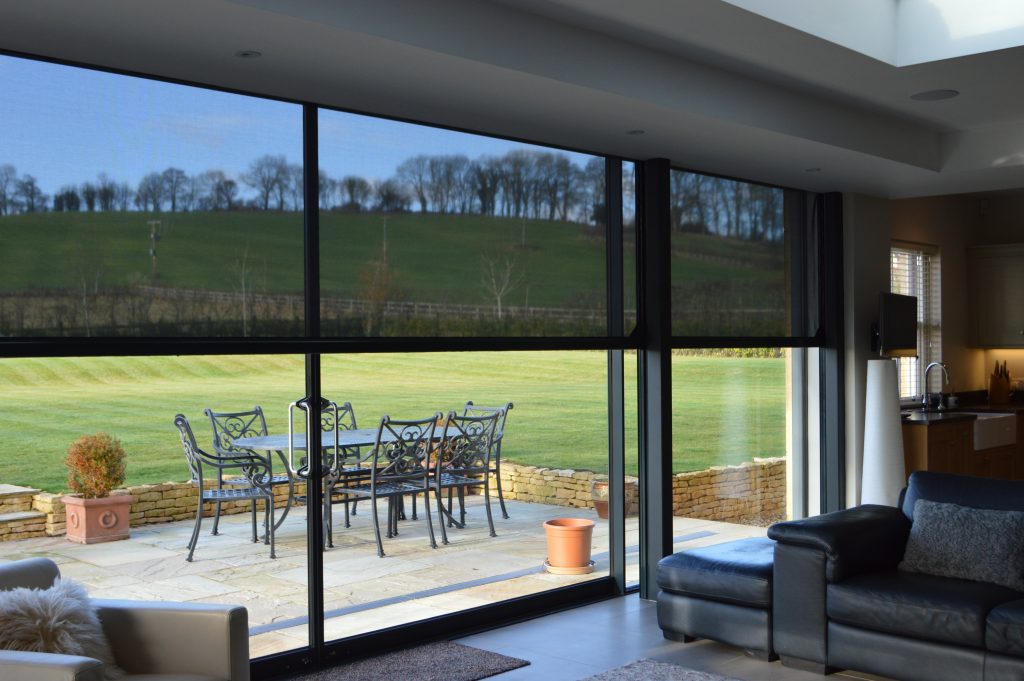
Unlike fixed mesh panels or permanent barriers, retractable systems preserve the clean lines and openness that open-plan design relies on. When retracted, the screen is discreetly housed within its cassette, leaving glazing systems visually uninterrupted.
This allows homeowners and designers to maintain:
- Full transparency through glazing
- Clean architectural detailing
- Flexible use of openings
- A consistent visual language across the façade
In short, the screen becomes part of the design, not an afterthought.
Supporting airflow without compromise
Ventilation is one of the core benefits of open-plan living. Opening large doors allows fresh air to move freely through the home, supporting comfort and indoor air quality.
Retractable screens enable this airflow while preventing insects from entering the space. This allows doors to remain open for longer periods, particularly during evenings and warmer seasons, without disrupting comfort.
For open-plan living, this means:
- Natural cooling without reliance on air conditioning
- Continuous airflow across living zones
- Comfortable indoor temperatures during summer months
- A calmer, more usable living environment
The result is a home that feels open and breathable, without unwanted intrusions.
Uninterrupted views and visual clarity
One of the most important design principles in open-plan houses is the preservation of views. Whether overlooking a garden, terrace, countryside, or urban setting, visual connection is central to the feeling of space.
Modern retractable screens are engineered with mesh options that prioritise clarity while maintaining performance. When deployed, the screen remains subtle and visually lightweight. When retracted, it disappears entirely.
This ensures:
- Sightlines remain clean and uninterrupted
- Glazing retains its architectural impact
- Interior spaces continue to feel open and connected
For both designers and homeowners, this balance is critical.

Flexible living for changing conditions
Open-plan design is not static. Spaces must adapt to:
- Weather changes
- Time of day
- Seasonal use
- Privacy needs
- Entertaining versus everyday living
Retractable screens support this flexibility. With smooth manual or motorised operation, homeowners can respond instantly to changing conditions – extending or retracting screens as required.
This adaptability allows open-plan living spaces to function comfortably for more of the year, not just during ideal weather.
The home remains open when it should be and protected when it needs to be.
Compatibility with large glazing systems
Open-plan homes often rely on large openings, such as:
Retractable screen systems are designed to integrate seamlessly with these configurations. They can be tailored to suit wide spans, tall openings, and complex layouts without disrupting framing lines or architectural proportions.
This makes them particularly well suited to modern open-plan houses, where standard screening solutions simply do not meet the design brief.
Maintaining architectural simplicity
One of the reasons designers and homeowners choose retractable screens is their ability to remain visually discreet.
When not in use:
- The cassette blends into surrounding frames
- Tracks remain minimal
- No permanent mesh obstructs the opening
This preserves the architectural simplicity that defines open-plan design.
The screen becomes an invisible layer of performance – supporting comfort without competing with the architecture.
Open-plan living without everyday compromise
Open-plan design promises freedom, light, and connection. But without practical solutions, those benefits can be limited by everyday frustrations.
Retractable screens allow homeowners to fully enjoy open-plan living by:
- Keeping doors open without insects
- Supporting natural airflow
- Preserving uninterrupted views
- Maintaining clean, modern aesthetics
- Allowing spaces to adapt effortlessly
Rather than altering the design, screens quietly enhance how the home functions.
Designed to complement, not compete
In successful open-plan homes, every element should work together – architecture, glazing, interiors, and functional features.
Retractable screens do not dominate or distract. Instead, they support the design intent, allowing spaces to perform better while looking exactly as they were intended to.
This is why retractable screens have become an increasingly important detail in modern open-plan living – valued by architects, designers, and homeowners alike.
Final thoughts
Open-plan living is about more than removing walls. It is about creating homes that feel open, comfortable, adaptable, and connected to their surroundings.
Retractable screens support this vision by adding protection without compromise – enabling airflow, preserving views, and allowing indoor and outdoor spaces to flow naturally together.
For anyone planning a renovation, extension, or new build, retractable screens are not simply an accessory – they are an integral part of making open-plan living work as beautifully in practice as it does in design.
Other Posts
Industry News

Insect News

Insect News
Our solutions
Explore more products in our range


