
Designing Wellness Spaces That Work All Year

There’s a noticeable shift in how garden rooms are being used. What were once occasional spaces – used in good weather or at weekends – are now part of everyday life. Morning workouts, quiet breaks during the day, or a place to switch off in the evening.
Because of this, expectations have changed. These environments are no longer judged on how they look alone, but on how they feel to use, day after day, in every season.
For a wellness space to truly support daily life, it needs to feel comfortable, usable, and balanced throughout the year – not just in ideal conditions. This is where more considered design choices, like screens for doors and windows, begin to play a more important role.
When design looks right but doesn’t always feel it
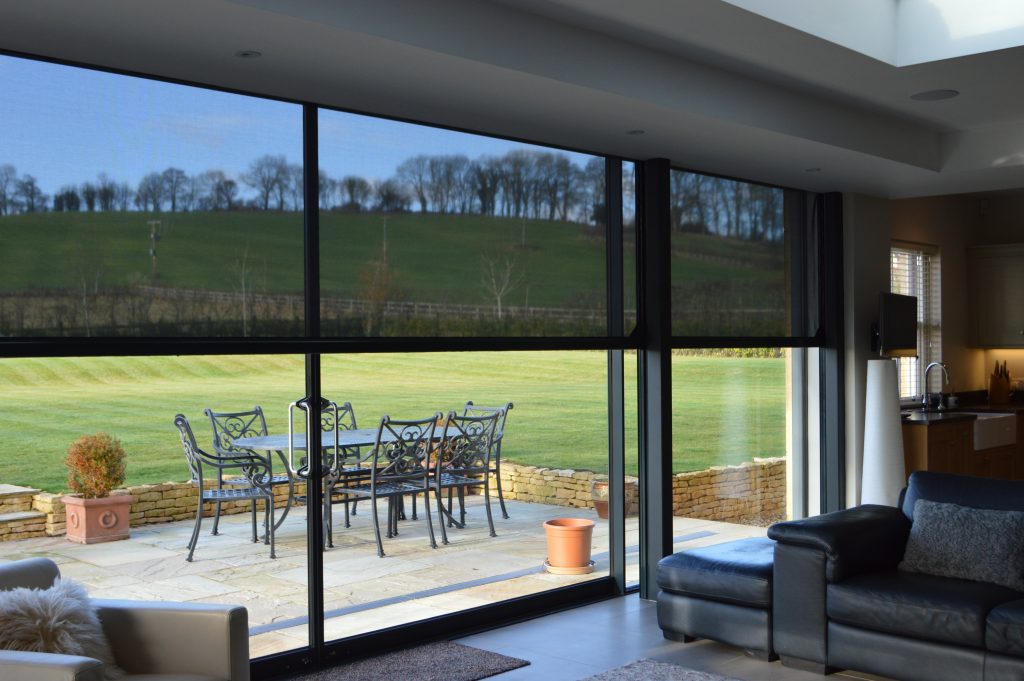
Visually, these spaces often have everything they need. Large areas of glazing, clean lines, and a strong connection to the outdoors all contribute to the calm, open feel that makes wellness spaces so appealing.
However, these same features can also introduce challenges that only become apparent through daily use. Temperature can build quickly in direct sunlight, glare can make the space uncomfortable at certain times of day, and airflow can be limited if doors and windows are not kept open. At the same time, leaving openings fully exposed can lead to insects and debris entering the space, which often results in doors being closed again sooner than intended.
Individually, these issues may seem minor, but together they have a noticeable impact on how the space feels to use. A room that is too warm, too bright, or difficult to keep open comfortably becomes somewhere that is used less often, or for shorter periods of time. Over time, this can undermine the very purpose of the space, particularly in a wellness setting where comfort, calm and consistency are key.
Designing for comfort, not just appearance
Designing a successful garden wellness room therefore involves thinking beyond appearance and considering how the space performs in everyday life. Factors such as airflow, light control and usability need to be addressed in a way that supports the space without compromising its overall design.
Rather than relying on reactive solutions, such as closing blinds or shutting doors, a more considered approach allows these elements to be managed more naturally. This is often where more subtle design elements, such as discreet screening, begin to play a more important role.
Making airflow part of the design
Airflow is one of the first things you notice in a space like this. When air is able to move freely, the whole room feels lighter and more comfortable, whether it’s being used for exercise or simply somewhere to sit and relax.
In theory, this is solved by opening doors and windows. In practice, it’s not always that simple. Openings are often closed again not long after, not because the space doesn’t need fresh air, but because something interrupts it. Insects, debris, or even just the inconvenience of leaving the space exposed can all change how that opening is used.
This is where integrated fly screens can make a difference. By allowing doors and windows to remain open without disruption, it supports natural ventilation in a way that feels easy and consistent, rather than something that needs to be managed throughout the day.

When light becomes too much
Natural light is one of the defining features of a garden room. It creates the open, calm environment that makes these spaces so appealing in the first place.
But as the day changes, so does the quality of that light. What feels soft and balanced in the morning can become harsh later on, creating glare and increasing the temperature of the space. Closing blinds or covering the glazing often solves one problem, but creates another, reducing the sense of openness that makes the space work so well.
A more considered approach allows light to be softened rather than blocked entirely. Solar screens can help filter sunlight as it enters the space, reducing glare and helping to manage temperature, while still maintaining brightness and a clear connection to the outdoors.
Keeping the connection to the outdoors
One of the main reasons for investing in a wellness space is the connection it creates with the outside. Doors are designed to open wide, allowing the space to extend into the garden and feel less enclosed.
However, that connection only works if it can be maintained comfortably. If openings are regularly closed due to insects or heat, the space begins to feel more separate than intended. Discreet screening helps to support that connection by allowing openings to remain usable. The space can stay open, fresh air can move through, and the boundary between inside and outside feels more natural and consistent.
A space that works without thinking about it
When all of these elements come together, the space starts to feel different. It’s not something that needs constant adjustment throughout the day. You’re not thinking about when to open or close doors, or how to manage the light – it simply works in the background. That’s often the difference between a space that looks good, and one that becomes part of everyday life.
Subtle design decisions, like integrating discreet screening, don’t change the appearance of the space, but they do change how it feels to use. They allow it to stay comfortable, calm and usable, without interruption. As more homeowners invest in garden spaces, there’s a growing understanding that visual design alone isn’t enough. Comfort, consistency and ease of use are what determine whether a space is used every day. And it’s often the smaller, less visible details, like screening, that make the biggest difference.
Other Posts
Industry News

Insect News

Insect News
Our solutions
Explore more products in our range


