
Solar Screens vs. Window Tints: Which is Better?

Managing heat, glare and comfort in the home has become increasingly important, particularly as modern architecture embraces larger areas of glazing, bifold doors and expansive sliding systems. While natural light is a defining feature of contemporary living, it can also introduce challenges – overheating, harsh glare and reduced usability of indoor spaces.
When considering solutions, many homeowners find themselves comparing solar screens vs window tints. Both aim to improve comfort, but they approach the problem in very different ways.
This blog explores how each option performs, where they differ, and why flexibility and usability are key factors – especially in homes designed for indoor-outdoor living.
Understanding the two options
What are solar screens?
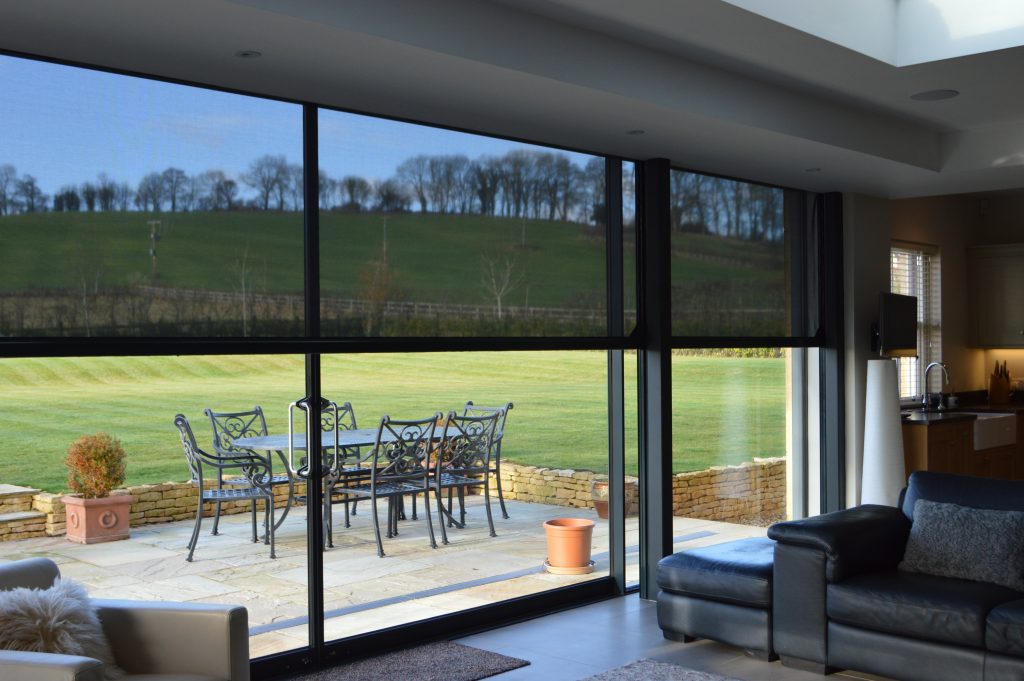
Solar screens are external shading systems designed to reduce solar heat gain and glare before sunlight reaches the glass. When retractable, they can be deployed or concealed depending on conditions.
They are particularly suited to:
- Bifold and sliding doors
- Large glazed openings
- Outdoor-indoor transitional spaces
Rather than permanently altering the glass, solar screens sit within the architecture, offering shading only when needed.
What are window tints?
Window tints (or window films) are applied directly to the glass. They work by reducing the amount of solar energy and light entering through the glazing.
They are:
- Fixed and permanent once installed
- Applied internally or externally
- Constant in their level of shading
While effective in reducing brightness and some heat, they do not adapt to changing conditions.
Heat reduction: Fixed vs. responsive control
Both solutions aim to reduce heat, but their approach is fundamentally different.
Window tints provide a consistent level of solar reduction throughout the day. This can help stabilise indoor temperatures, but it also means:
- You cannot increase or decrease shading
- Heat reduction is the same in all conditions
Solar screens, by contrast, offer responsive control. They can be lowered during peak sunlight and retracted when the temperature drops or sunlight becomes desirable.
This flexibility is especially valuable in spaces that experience shifting sun exposure throughout the day.
Glare reduction without compromise
Glare is often the most immediate issue in bright spaces – making it difficult to work, relax or enjoy the view.
Window films reduce glare, but at a cost:
- The effect is constant, even on overcast days
- Natural light is permanently softened
- Views can appear slightly muted or tinted
Solar screens allow homeowners to manage glare dynamically:
- Lower the screen when glare is strongest
- Retract it to restore full clarity and brightness
This ensures the space remains comfortable without permanently altering the quality of light.
Airflow and ventilation
One of the most significant differences – and often overlooked – is airflow.
Window tints do not affect ventilation. To reduce heat, windows and doors often remain closed, particularly during hot weather.
Solar screens support a different approach:
- Doors can remain open while the screen is in place
- Airflow is maintained
- Insects can be kept out when combined with integrated screening systems
This makes solar screens particularly effective in homes designed around open-plan living and garden connection.

Suitability for bifold and sliding doors
Large glazed openings present a unique challenge. They are central to the home’s design, but also the primary source of heat and glare.
Window films:
- Are applied directly to the glass
- Remain visible at all times
- Continue to tint the view even when doors are open
Solar screens:
- Integrate discreetly within the frame
- Can span wide openings
- Disappear completely when not in use
For bifold and sliding doors, this distinction is crucial. The ability to remove the shading entirely preserves both the architectural intent and the experience of open space.
Everyday usability
Comfort solutions should adapt to how a space is actually used – not restrict it.
Window tints are passive:
- No interaction required
- No adjustment possible
- Always present
Solar screens are interactive:
- Used only when needed
- Easily adjusted throughout the day
- Aligned with lifestyle and routine
This makes a noticeable difference in how a space feels – particularly in homes where conditions change quickly with weather or time of day.
Long-term practicality
Over time, the limitations of fixed solutions become more apparent.
Window films:
- Cannot be adjusted once installed
- May need replacement as they age or discolour
- Do not adapt to seasonal changes
Solar screens:
- Offer long-term flexibility
- Continue to perform across seasons
- Provide control without permanent compromise
Rather than committing to a single level of shading, homeowners retain the ability to respond to their environment.
Supporting indoor-outdoor living
Modern homes are increasingly designed to blur the boundary between inside and out. Comfort solutions must support this – not interrupt it.
Window tints can unintentionally create a barrier:
- Visual separation due to tinting
- Reduced clarity when looking out
- No contribution to outdoor usability
Solar screens enhance this connection:
- Allow doors to remain open
- Create shaded, usable threshold spaces
- Maintain visual continuity with the outdoors
This aligns more naturally with contemporary living, where flexibility and flow are essential.
Conclusion: Which is better?
When comparing solar screens vs window tints, the answer depends on what matters most.
If the goal is a fixed, low-interaction solution, window tints may provide a straightforward option.
However, for homeowners seeking:
- Greater control over heat and glare
- Improved airflow and ventilation
- Flexibility throughout the day and seasons
- A solution suited to large glazed openings
Solar screens offer a more versatile and user-focused approach. Rather than permanently altering the glass, they work with the space – adapting to how it is used and enhancing comfort without compromise.
Other Posts
Industry News

Insect News

Insect News
Our solutions
Explore more products in our range


