
Beautiful but Barely Used: Why Some of the Best Rooms in Homes Get Left Behind

Some of the most visually impressive spaces in modern homes are often the least used. Conservatories filled with natural light. Garden rooms designed for relaxation. Glazed extensions that open onto terraces and landscaped gardens. These spaces are created with the intention of enhancing everyday living, yet many homeowners gradually find themselves spending less and less time in them.
What begins as a favourite feature of the home can slowly become a room reserved only for certain weather conditions or occasional use. During summer, it may feel too hot or exposed. In the evenings, insects become an irritation once doors are opened. Bright glare can make the room uncomfortable during the day, while temporary fixes such as closed blinds or shut doors often remove the very openness that made the space appealing in the first place.
The issue is rarely the design of the room itself. More often, it is a matter of comfort and usability.
Why beautiful spaces become difficult to use
Rooms designed around glazing and openness naturally experience more interaction with external conditions. Sunlight, airflow, temperature changes, and insects all become more noticeable in spaces that blur the line between indoors and outdoors.
While these features create visual appeal, they can also introduce small frustrations that affect how regularly the room is used.
Common issues include:
- Excessive heat build-up during warmer months
- Harsh glare on bright afternoons
- Limited airflow when doors remain closed
- Insects entering through open doors and windows
- Temporary shading solutions making rooms feel enclosed
- Difficulty maintaining comfortable temperatures
Over time, homeowners adapt their behaviour around these inconveniences. Doors stay shut more often. Blinds remain closed during the day. Certain rooms become “seasonal” rather than integrated into everyday life. The result is a space that still looks beautiful, but no longer feels effortless to use.
The hidden cost of temporary fixes
Many homeowners respond to these challenges with quick practical solutions. Portable fans, blackout blinds, heavy curtains, or keeping doors permanently closed can provide temporary relief, but often at the expense of comfort or aesthetics.
For example:
- Closing doors reduces natural ventilation
- Heavy blinds block garden views and daylight
- Temporary insect solutions can feel visually intrusive
- Freestanding cooling devices add clutter
- Darkened rooms lose their original atmosphere
These compromises can unintentionally work against the architectural purpose of the space. Rooms originally designed to feel open, bright, and connected to the outdoors begin to feel separated from it instead.
Comfort is what makes a space usable
The most successful living spaces are not simply visually impressive. They are comfortable enough to become part of everyday routines.
A garden room should feel pleasant on a warm afternoon. A conservatory should remain usable beyond a narrow temperature window. Large doors should be able to stay open without inviting insects inside.
Small improvements to airflow, glare control, and solar management can dramatically change how often a room is genuinely enjoyed.
Importantly, these improvements do not need to involve major structural changes or visually heavy additions.
Designing for everyday living rather than occasional use
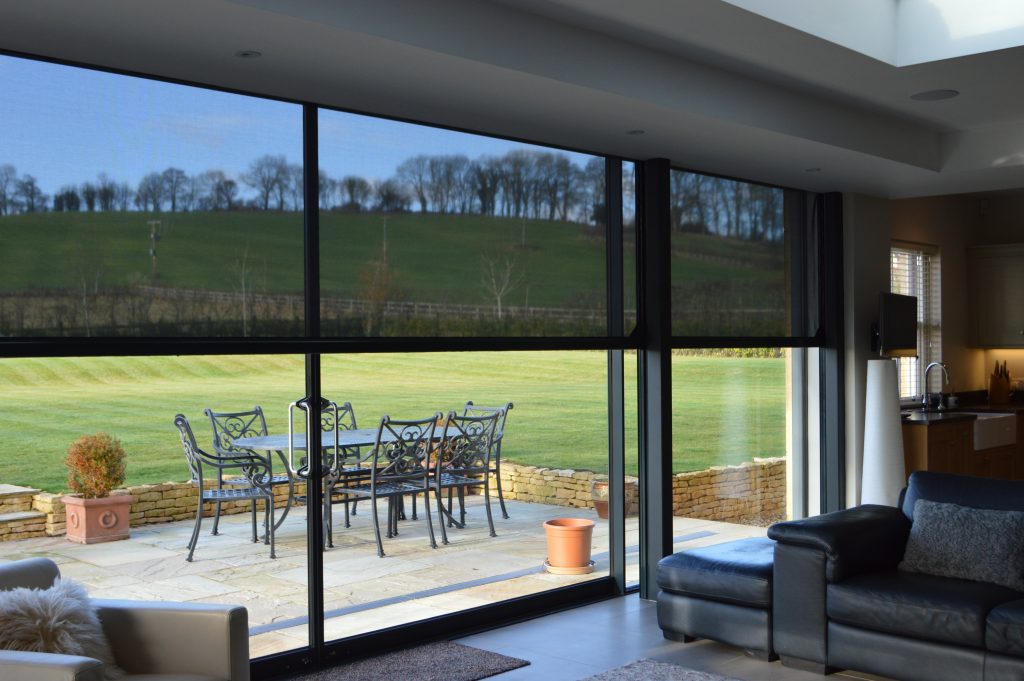
There is a growing shift towards design solutions that support usability without disrupting architecture. Rather than adding obvious layers to a space, homeowners are increasingly looking for discreet systems that integrate quietly into the home.
This is especially true in contemporary extensions and renovations where clean lines, openness, and minimal detailing are important.
Retractable screening systems can help support:
- Better airflow throughout warmer months
- Reduced insect intrusion when doors are open
- More comfortable light levels
- Improved daytime usability
- Flexible indoor-outdoor living
- Cleaner visual integration compared with temporary alternatives
Because these systems retract away when not needed, they preserve the original character of the room while improving day-to-day comfort.

Conservatories and garden rooms: Spaces that benefit most
Conservatories
Conservatories are often among the brightest spaces in a home, but also among the most difficult to regulate comfortably throughout summer.
Heat build-up and excessive brightness can make the room feel uncomfortable during the middle of the day, leading many homeowners to avoid using it regularly.
Thoughtful solar shading and discreet screening can soften the environment without eliminating the natural light that gives conservatories their appeal.
Garden rooms
Garden rooms are intended to create a closer relationship with outdoor spaces, particularly during warmer months. However, once doors are opened for ventilation, insects can quickly become disruptive.
Retractable insect screens allow homeowners to maintain airflow while keeping the space more comfortable and practical for daily use.
Glazed extensions
Large glazed extensions are designed to feel open and expansive, but glare and uneven temperatures can affect how usable these spaces feel throughout the day.
Integrated screening solutions help create a more balanced environment while maintaining the architectural simplicity of the extension itself.
The importance of discreet design
For design-conscious homeowners, functionality alone is not enough. Added features should feel intentional and sympathetic to the architecture of the home. Bulky fittings, visible mesh panels, or permanent shading structures can detract from carefully considered interiors and external elevations.
This is why discreet retractable systems are increasingly favoured in premium residential projects. When integrated thoughtfully, they remain largely hidden until required, allowing the design of the home to remain visually uninterrupted. The result feels considered rather than added on.
Creating spaces that work in real life
There is often a difference between designing a space that photographs beautifully and creating one that genuinely supports everyday living. The rooms homeowners value most are usually those that feel comfortable, adaptable, and easy to use throughout changing conditions.
By addressing practical challenges such as glare, airflow, heat, and insects in a subtle way, previously underused spaces can become active parts of daily life again.
Instead of being admired occasionally, these rooms begin to fulfil the role they were originally intended for – places to relax, gather, work, dine, and connect with the outdoors comfortably.
Making the most of the spaces you already have
Many homeowners assume improving comfort requires major renovation work. In reality, relatively small interventions can significantly improve how a space performs day to day.
Thoughtful retractable screening systems offer a way to enhance usability while preserving the openness, light, and architectural character that made these spaces desirable in the first place.
Beautiful spaces should not feel difficult to enjoy. With the right balance of comfort and discretion, conservatories, garden rooms, and glazed extensions can become some of the most lived-in and valued areas of the home – not just the most admired.
Other Posts
Industry News

Insect News

Insect News
Our solutions
Explore more products in our range


